The Effect of Liquid Organic Fertilizer of Stale Rice and Sediment of Catfish Ponds on the Growth of Chili Plants (Capsicum annuum L.)
Pengaruh Pupuk Organik Cair Nasi Basi dan Endapan Kolam Ikan Lele terhadap Pertumbuhan Tanaman Cabai (Capsicum annuum L.)
Abstract
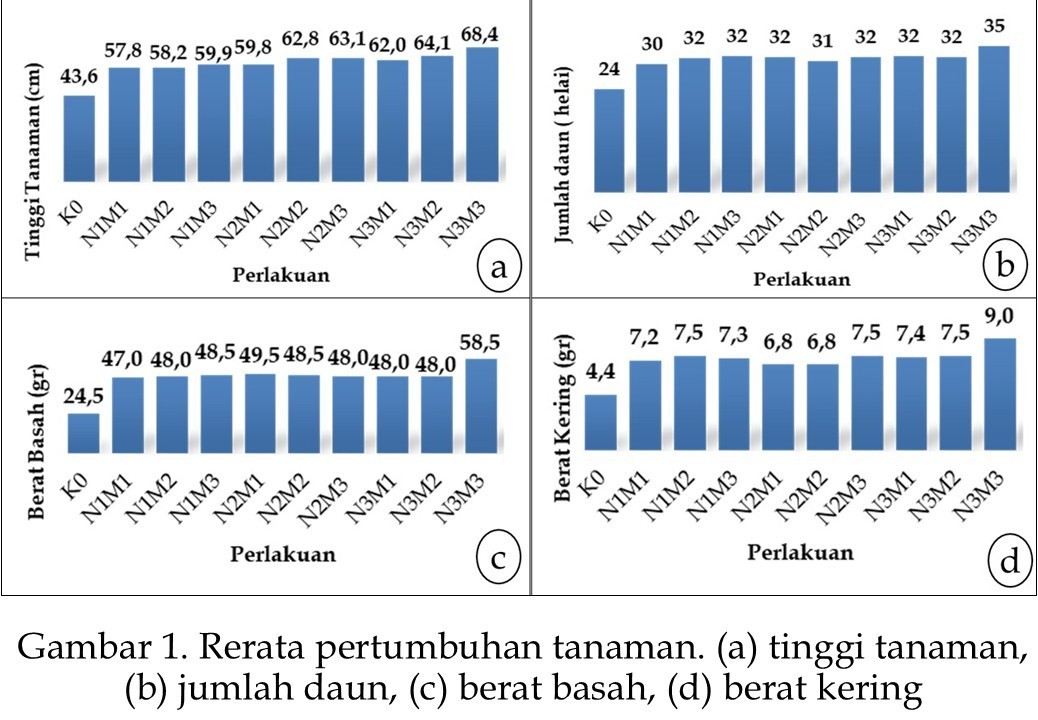
riculture in Indonesia produces various types of plants such as staple foods such as rice, corn and vegetables. Vegetables that contain a lot of nutrients include chili plants. The productivity of chili plants in Indonesia is still relatively low, one of the factors is the low soil fertility due to the use of inorganic fertilizers. Therefore, alternative organic fertilizers are made from restaurant/household waste, one of which is rice waste and sediment water from catfish ponds that can be recycled. This study aims to evaluate the impact of using liquid organic fertilizer (LOF) derived from fermented rice and catfish pond sediment on the growth of curly red chili plants (Capsicum annum L.). The research utilized a completely randomized design (CRD) with a factorial model comprising two factors. The first factor was LOF made from fermented rice (Factor M), and the second was LOF from catfish pond sediment (Factor N). Each factor was tested at three treatment levels, resulting in nine treatment combinations. Each combination was replicated three times, along with three replications for a negative control, totaling 30 experimental units. Data analysis was conducted using ANOVA, followed by post-hoc testing with the Least Significant Difference (LSD) method at a 5% significance level. The findings indicated that the optimal results were achieved with the N3M3 treatment combination, which involved a dose of 300 ml of fermented rice LOF and 300 ml of catfish pond sediment LOF per liter of water. This combination yielded the best performance in terms of plant height, leaf count, fresh weight, and dry weight.
References
A’yun, A. Q., Ansori, A., Sekaringgalih, R., Rachmah, A. N. L., & Susanti, Y. (2023). Peningkatan Kemampuan Masyarakat Melalui Sosialisasi Pembuatan Pupuk Bio Organik Dari Nasi Basi. Selaparang: Jurnal Pengabdian Masyarakat Berkemajuan, 7(2), 885. Https://Doi.Org/10.31764/Jpmb.V7i2.14891
Amanah, N., & Azis, A. (2023). Edukasi Pemanfaatan Nasi Basi Sebagai Pupuk Organik Cair Dan Aplikasinya Untuk Pemupukan Tanaman Di Kelurahan Campaga, Kecamatan Tompobulu, Kabupaten Bantaeng. Abdi Techno, 3(1), 28–33.
Driantama, I., Walida, H., & Lestari, W. (2021). Capsicum Frutescens Respon Pemberian Pupuk Organik Cair Limbah Rumah Tangga Terhadap Pertumbuhan Tanaman Cabai Rawit (L.). Jurnal Agroplasma, 8(2), 46–53. Https://Doi.Org/10.36987/Agroplasma.V8i2.2219
Gustiani, S. (2021). Kombinasi Poc Sabut Kelapa Dan Npk Terhadap Pertumbuhan Dan Hasil Tanaman Cabai Merah (Capsicum Annum L.). Agrivet : Jurnal Ilmu-Ilmu Pertanian Dan Peternakan (Journal Of Agricultural Sciences And Veteriner), 9(2), 206–212. Https://Doi.Org/10.31949/Agrivet.V9i2.1804
Gustiar, F., Munandar, M., Qasanah, U., & Handayani, R. S. (2020). Analisis Pupuk Organik Cair Air Limbah Budidaya Ikan Dengan Penambahan Bahan Organik Menggunakan Metode Mineralisasi Aerobic Dan Anerobic. Seminar Nasional Lahan Suboptimal Ke-8 Tahun 2020, Palembang 20 Oktober 2020 ", 356–363.
Henggra, M. (2022). Pengaruh Pupuk Organik Cair Air Limbah Budidaya Lele Terhadap Pertumbuhan Dan Hasil Tanaman Mentimun (Cucumis Sativus L.) Effect Of Organic Liquid Fertilizer Wastewater Catfish Cultivation On Growth And Production Of Cucumber Plants (Cucumis Sativus L.). 01(01), 40–49.
Karim, H., Suryani, A. I., Yusuf, Y., & Khaer Fatah, N. A. (2019). Pertumbuhan Tanaman Cabai Rawit (Capsicum Frutescens L.) Terhadap Pemberian Pupuk Organik Cair Limbah Pisang Kepok. Indonesian Journal Of Fundamental Sciences, 5(2), 89. Https://Doi.Org/10.26858/Ijfs.V5i2.11110
Mustikarini, N., Ikaromah, A., Supriyadi, A., Nugraha, T. A., & Ma’ruf, N. A. (2022). Pengaruh Variasi Komposisi Dekomposer EM4 Dan Molase Pada Pembuatan Pupuk Organik Cair Dari Limbah Budidaya Lele. Jurnal Pengendalian Pencemaran Lingkungan (JPPL), 4(1), 47–52. Https://Doi.Org/10.35970/Jppl.V4i1.1100
Neni Selita, P. A. (2022). Jurnal Akar Volume 1 Nomor 1 Edisi April 2022. 1(April).
Sagiarti, T., Okalia, D., & Markina, G. (2020). Analisis C-Organik, Nitrogen Dan C/N Tanah Pada Lahan Agrowisata Beken Jaya Di Kabupaten Kuantan Singingi. Jurnal Agrosains Dan Teknologi, 5(1), 11. Https://Doi.Org/10.24853/Jat.5.1.11-18
Sulfianti, Risman, & Inang Saputri. (2021). Analisis Npk Pupuk Organik Cair Dari Berbagai Jenis Air Cucian Beras Dengan Metode Fermentasi Yang Berbeda. Jurnal Agrotech, 11(1), 36–42. Https://Doi.Org/10.31970/Agrotech.V11i1.62
Zahara T, A. D., Wisnujati, N. S., & Siswati, E. (2021). Analisis Produksi Dan Produktivitas Cabai Rawit (Capsicum Frutescens L) Di Indonesia. Jurnal Ilmiah Sosio Agribis, 21(1), 18–29. Https://Doi.Org/10.30742/Jisa21120211345